

Agri & Food Trade in 2026: What will Matter More Than Demand?
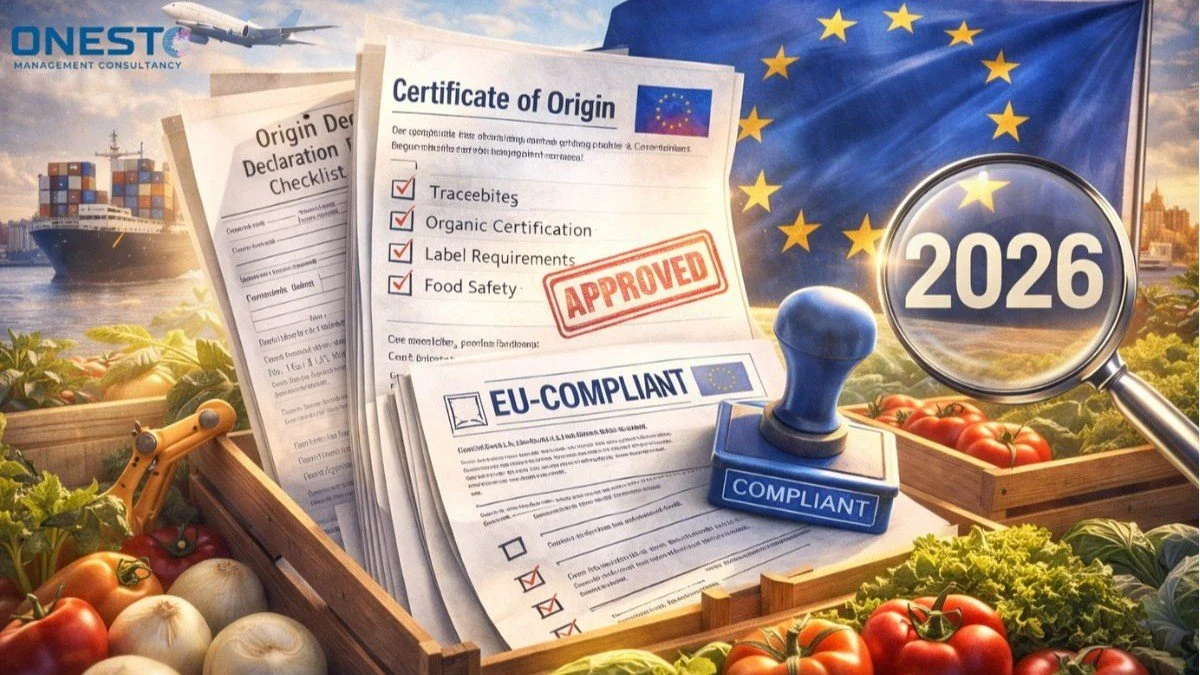
Introduction: Demand Is No Longer the Bottleneck
Demand for agri and food products in the European Union has never been the problem. Europe continues to import significant volumes of:
Processed foods
Fresh and frozen produce
Ingredients and agri-inputs
Organic and specialty products
Yet, as we approach 2026, a paradox is becoming increasingly clear:
EU buyers want more suppliers—but approve fewer of them.
The reason is not quality. It is not pricing. It is documentation, traceability, and regulatory readiness.
The 2026 Reality: Agri Trade Is Becoming a Compliance-First Sector
Historically, agri and food trade operated on a simple equation:
Good product + competitive price = market access
That equation is now obsolete. By 2026, EU food imports will be shaped primarily by:
Traceability and origin verification
Labeling accuracy and language compliance
Sustainability disclosures
Food safety documentation and audit trails
Demand will open the door. Documentation will decide who enters.
Why the EU Is Raising the Bar (Quietly but Firmly)
The tightening of agri-food compliance is not political signaling—it is structural. Three forces are driving this shift:
1. Consumer Accountability
EU consumers increasingly demand:
Proof of origin
Ethical sourcing
Environmental responsibility
Retailers and distributors are passing this pressure upstream to suppliers.
2. Regulatory Harmonisation
EU authorities are aligning food safety, labeling, and sustainability standards across member states. This reduces ambiguity—but increases scrutiny.
A product approved in one EU country must now withstand pan-EU compliance expectations.
3. Risk Transfer to Importers
EU importers are increasingly liable for:
Incorrect labeling
Missing certificates
Inconsistent origin documentation
As a result, buyers prefer suppliers who reduce regulatory risk—not add to it.
Where Exporters Will Struggle in 2026
Based on current trade patterns, the biggest challenges will not be agricultural—they will be administrative.
Common failure points include:
Incomplete or inconsistent Certificates of Origin
Incorrect HS classification for processed food products
Labeling errors (language, allergens, nutritional info)
Weak traceability between farm, processor, and exporter
Misalignment between commercial invoices and regulatory filings
None of these issues affect product quality—yet they can block market access entirely.
India’s Opportunity—and Its Constraint
India is exceptionally well-positioned for EU agri and food trade in 2026.
Strengths include:
Scale and diversity of agricultural production
Competitive processing capabilities
Growing organic and specialty product segments
However, India’s constraint is not supply—it is structure.
Many exporters still treat documentation as:
A shipment-stage requirement
A logistics issue
A buyer responsibility
In 2026, this mindset will be the biggest barrier to growth.
Why Spain Matters More Than Ever for Agri & Food Trade
Spain’s role in agri-food trade with India is evolving beyond bilateral imports. Spain increasingly acts as:
An EU entry and validation market
A testing ground for labeling and compliance
A logistics and distribution hub for Southern Europe
Indian exporters who use Spain strategically—rather than transactionally—can:
Shorten EU onboarding timelines
Improve compliance alignment
Reduce market-entry risk
This is particularly relevant for processed foods, ingredients, and value-added agri products.
The Shift from “Exporter” to “EU-Ready Supplier”
By 2026, EU buyers will differentiate between:
Exporters who ship products
Suppliers who integrate into compliant supply chains
The latter will be preferred. This requires:
Pre-validated documentation sets
Clear traceability frameworks
Regulatory understanding at management level
Alignment between commercial, legal, and operational teams
In short, documentation becomes a strategic capability—not paperwork.
Agri and food trade in 2026 will not be won in the field or the factory alone. It will be won in:
Documentation rooms
Compliance reviews
Contract structuring discussions
Buyer due-diligence processes
The companies that succeed will be those that prepare before the harvest, not before the shipment. At Onesto, we work with agri and food exporters to bridge the gap between production excellence and regulatory readiness, helping them move from opportunity to sustained EU presence.
Looking Ahead
In the next editions, we will explore:
EU food labeling & traceability deep dives
Spain as a strategic agri-food gateway
Contract structuring for long-term EU supply agreements
"In 2026, food trade will not fail for lack of demand. It will fail for lack of documentation."
